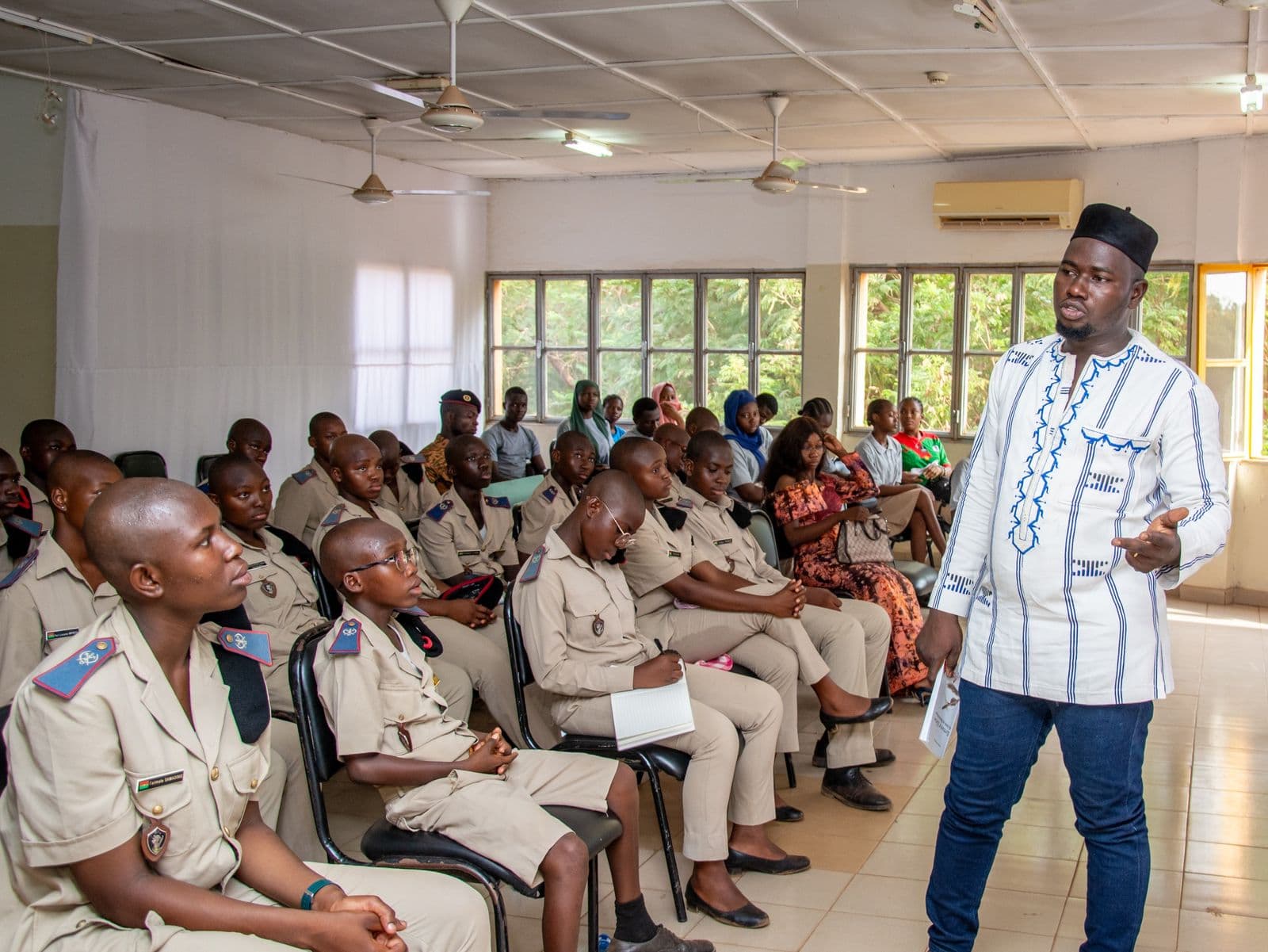
Building Africa’s AI Future: Why Youth Training Must Become a Continental Priority
Africa’s young people need more than access to technology. They need the skills, opportunities and support to build businesses, create jobs and shape the continent’s AI future.
AFRICA'S AI FUTURE DEPENDS ON INVESTING IN ITS YOUNG PEOPLE Artificial intelligence is transforming how people learn, work, conduct research and build businesses. From generative AI tools that produce text, images and software to emerging agentic systems that can plan and execute multistep tasks, these developments are changing the skills required to participate in the global economy. For Africa, this transformation presents both an opportunity and a challenge. The continent has a young population with significant entrepreneurial potential, yet many young people lack affordable access to technology, practical training and pathways into employment. Without deliberate investment in AI skills, Africa risks becoming primarily a consumer of technologies developed elsewhere rather than a continent that designs, governs and commercializes its own AI solutions. At AI Nexus RTC, we believe AI training, research and consultancy must be central to Africa’s development agenda. Our objective is to help young people, businesses and institutions move beyond simply using AI tools towards building practical capabilities, developing locally relevant solutions and participating meaningfully in the emerging AI economy. The scale of the challenge is evident in existing digital skills data. According to the OECD’s Africa’s Development Dynamics 2024, only 9% of young people across 15 African countries studied had basic digital skills, while just 5% had intermediate digital skills. These figures measure digital skills rather than AI proficiency, but they demonstrate the foundational gap that AI training programmes must address. At the same time, young people are already experimenting with AI. A September 2026 UNICEF report, Skills for an AI World, found that up to 50% of surveyed children in consultations across five African countries used AI. The research involved 97 children aged 9–17 in the Democratic Republic of the Congo, Egypt, Mozambique, Rwanda, and Senegal. They reported using AI chatbots for schoolwork, information searches, and learning new skills. Although this Although this small, qualitative sample cannot represent all African children, it demonstrates that AI is already part of young people's experiences. The challenge, therefore, is not simply to introduce AI to young people. It is to equip them to use it effectively, critically and responsibly, while developing the technical capabilities needed to create their own solutions.